 1200
627
1200
627
Food Label Printing In-House: What You Need to Know
Written by
Matt Lawson
OKI shop, The OKI Pro Series printer experts 310
310
310
310
Read it in 6 minutes
Food producers used to treat labels the way they treated boxes: order a year’s worth, store them, use them up. Two things broke that model. Labelling rules that change what a label must say, and product ranges that change faster than label stock runs out.
That is why food label printing has moved in-house faster than almost any other kind of labelling. This guide covers what changed, what you can print yourself, and what the printing actually requires.
What is in-house food label printing?
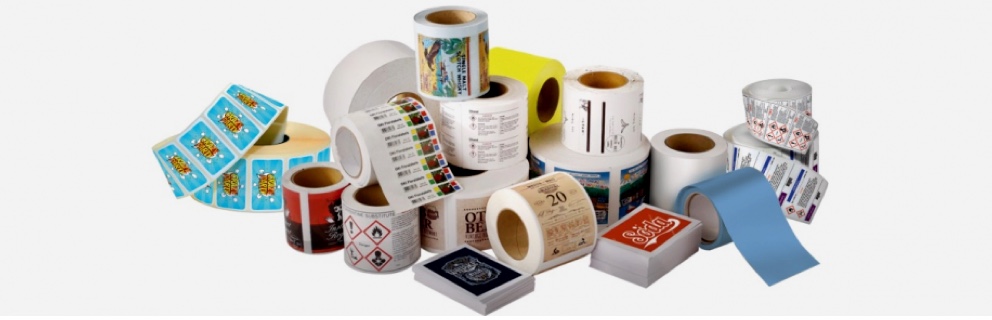
In-house food label printing means producing your own product labels on a printer at your own premises, onto blank die-cut label stock, instead of ordering pre-printed labels from a trade printer.
You print exactly the quantity you need, with today’s ingredient list and today’s date coding, and change the artwork whenever the product changes. There are no plates, no minimum orders and no lead time.
Why has food labelling moved in-house?
Because the label stopped being static. Three pressures did it.
The rules tightened. Since Natasha’s Law came into force in October 2021, food prepacked for direct sale in the UK has needed a full ingredient list with the fourteen major allergens emphasised. For many bakeries, delis, cafes and small producers, that turned labelling from a name and a date into a document that changes with every recipe.
Recipes and suppliers change. A substituted ingredient can change the allergen declaration, and the moment it does, every pre-printed label in the stockroom is not just wasted but wrong. Wrong allergen labelling is not a cosmetic problem.
Ranges multiplied. More flavours, more seasonal lines and more short runs mean more label designs, and pre-printed labelling punishes variety with a set-up cost and a minimum order per design.
For the rules themselves, work from the Food Standards Agency’s guidance at food.gov.uk rather than any printing company’s summary, ours included. What follows is about the printing.
What has to go on a food label?
At summary level, UK prepacked food labelling requires the product name, an ingredient list with allergens emphasised, net quantity, a date mark, storage conditions, the business name and address, and in many cases nutrition information.
The detail depends on what you sell and how you sell it, which is exactly why the FSA guidance should be the reference. The point for printing is simpler: a compliant food label carries a lot of small text that changes often, and it has to stay legible on the pack for the life of the product.
Why does pre-printed label stock become a liability?
Because every label you have already paid for is a bet that nothing will change.
A recipe tweak, a new supplier, a weight change, a rebrand or a price change makes the stock obsolete, and allergen changes make it dangerous to keep using. Producers end up choosing between writing off stock and delaying a product change until the labels run out, which is a decision nobody should be making on packaging grounds.
Printing in-house removes the bet. The label is produced when the product is, so it always matches.
What do you print food labels on?
Blank self-adhesive label stock, die-cut to your label shape and sold in sheets. The material matters as much as it does for outdoor plant labels, and for similar reasons.
Dry ambient goods can sit on coated paper labels. Chilled and frozen products need synthetic or specially faced stock, because refrigeration means condensation, and paper labels absorb it. Anything handled with oily fingers or wiped down wants a surface print that does not lift, which is a print-process question as much as a media one.
Two cautions. Make sure the stock is described as laser and LED compatible, because inkjet-only media can deform in a toner printer’s fuser and damage the machine. And confirm the label spec against your product with your media supplier, especially where the label sits in direct contact with unwrapped food, since food-contact suitability is a property of the specific media.
Is toner or inkjet better for food labels?
Toner, for the same reason it wins outdoors. It is fused to the label surface as a solid layer, so condensation in a chiller, freezer frost and handling do not smear or lift it.
Inkjet output on coated label stock can run when damp, and a food label that becomes illegible in the fridge has failed at its one legal job: telling the customer what is in the product.
What kind of printer does food labelling need?
A colour toner printer that handles label stock properly. In practice that means a machine with the media weight range for label sheets and synthetic stock, a paper path that does not curl them, and colour good enough that your labels sell the product as well as describing it.
OKI Pro Series machines are built for exactly this class of work. If your labels print onto kraft-look or coloured stock, you want the fifth station carrying white toner, which is covered properly in choosing a printer for food and confectionery packaging.
Running costs come down to label stock and toner. Treat published toner yields as standard-coverage figures and ask for an estimate against your own artwork, because dense label designs use considerably more.
Where does this fit with the rest of your packaging?
The same machine prints beyond the label. Producers using stand-up pouches can print directly onto the pouch rather than labelling it, and confectionery makers can produce sleeves and belly bands in short runs on the same footprint.
That matters for the economics. A printer justified only by labels is carrying its whole cost on one job; a printer doing labels, pouches and point of sale is not.
How do you get started?
List your products, note which are chilled or frozen, count how many label designs you run and how often any of them changed in the last year. That is your specification, and the change count is usually the number that settles the decision.
We supply OKI Pro Series printers to food producers across the UK. Call us on 01903 692222 or send us a label from your current range, and we will print its replacement as a sample so you can judge the output on your own artwork.